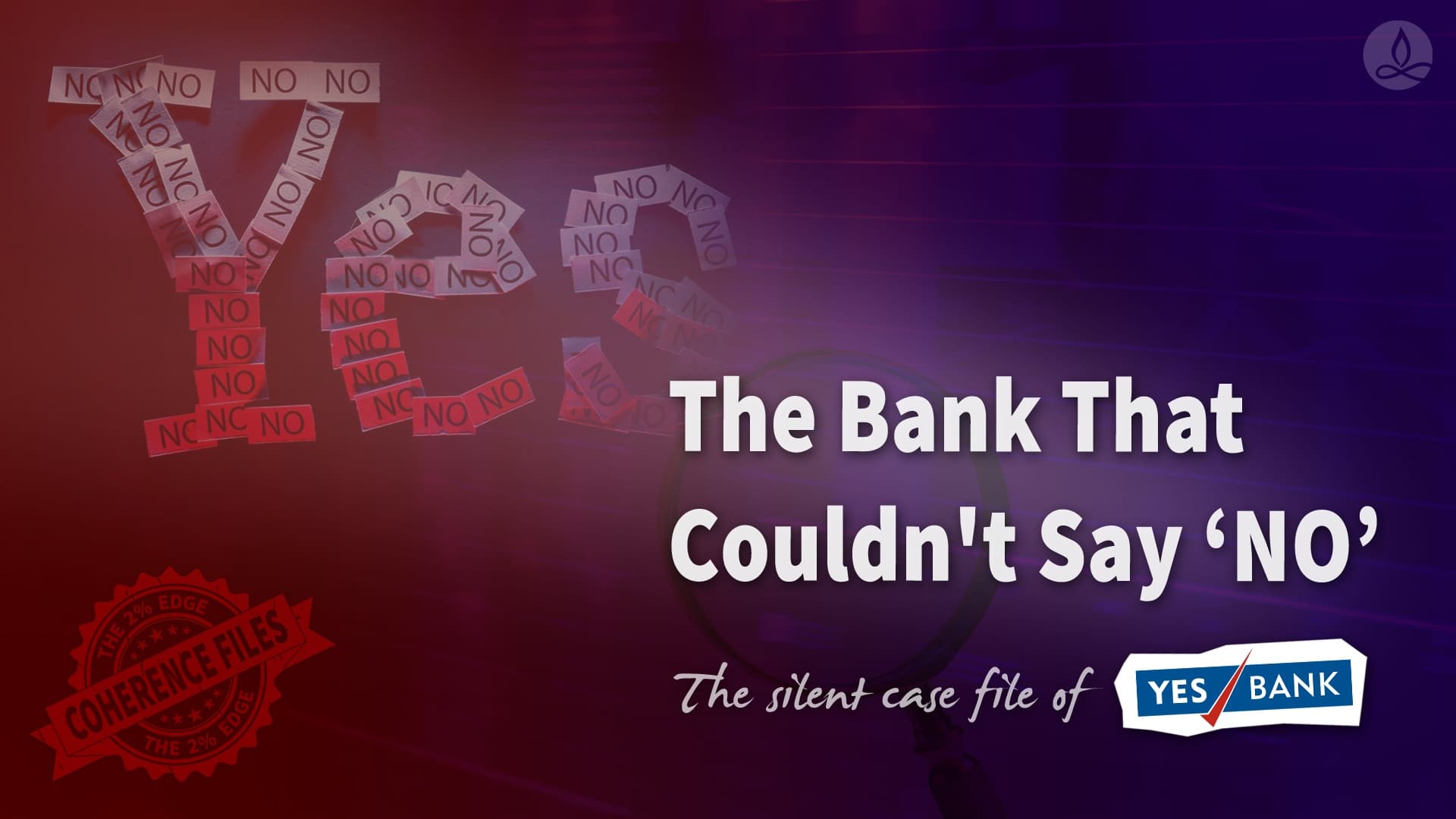
On 5 March 2020, millions of YES Bank customers woke up to a reality they never imagined.
The Reserve Bank of India had imposed a moratorium. Withdrawals were capped at ₹50,000. A bank people had trusted with their savings had, almost overnight, become a symbol of uncertainty.
For most people, this was where the crisis began. But in reality, the institution had been drifting for months—inside boardrooms and leadership meetings no customer would ever see.
Eighteen months before the moratorium, the RBI had written to the bank's board expressing serious concerns. The letter cited governance lapses, highly irregular credit management practices and a poor compliance culture. It also made a consequential decision: founder, Managing Director and CEO Rana Kapoor's term would end on 31 January 2019.
That letter changed the story.
It suggested that the bank's greatest challenge was no longer financial. Its own leadership systems were struggling to correct course.
When we think about YES Bank today, we remember the queues outside branches, the withdrawal limits, the rescue package led by SBI and the headlines that dominated the financial press. Those moments deserve attention. So do the months that came before them.
YES Bank was founded with extraordinary ambition. When it received its banking licence in 2004, its vision extended far beyond becoming another private-sector bank. Its founders spoke about building "the best quality bank in the world, in India."
For a long time, that ambition appeared to be translating into reality. The bank expanded rapidly. Its loan book grew aggressively. Investors rewarded its momentum. Rana Kapoor emerged as one of India's most celebrated bankers. Growth continued. Confidence grew. The institution appeared stronger with every passing year.
Yet growth can conceal as much as it reveals. Beneath the momentum, the organisation was gradually losing one of its most important capabilities—the ability to question itself.
A culture that took pride in saying "yes" to opportunity was becoming less comfortable saying "no" to its own decisions.
From a distance, the absence of friction resembles alignment. But inside the organisation, something else may be happening. People begin withholding questions they once would have asked.
That's what makes the YES Bank story such an important leadership case. The courts will continue to determine individual accountability, and several allegations remain contested. This article isn't an attempt to revisit those proceedings. Instead, it asks a different question.
How does an institution built by capable leaders, experienced directors, auditors, regulators and sophisticated investors gradually lose its ability to challenge its own judgment?
Or more simply, what happens when an organisation becomes so good at saying "yes" that nobody is left to say "no"?
When "Yes" Stops Being a Strength
There is nothing wrong with saying yes.
Every successful organisation is built on it.
Someone says yes to an ambitious vision.
Yes to entering a new market.
Yes to an unconventional idea.
Yes to taking a calculated risk others are unwilling to take.
Without that instinct, innovation slows, businesses stagnate and opportunities pass unnoticed.
The challenge begins when every "yes" goes untested.
The strongest leadership teams aren't defined by how quickly they agree.
They're defined by how safely they can disagree.
Where challenging an idea protects the institution rather than threatens the leader.
Where changing someone's mind is recognised as contribution rather than disloyalty.
That's where leadership coherence begins.
Not in consensus. In constructive tension.
Every high-performing executive team develops its own balancing system:
One leader pushes for speed.
Another slows the conversation.
One sees opportunity.
Another sees exposure.
One asks how to grow.
Another asks what the organisation could lose.
Neither perspective is complete on its own.
Together, they produce better decisions.
When one of those voices disappears, the organisation loses more than disagreement. It loses its ability to self-correct. That's how agreement becomes dangerous when it becomes habitual. Everyone leaves believing they are aligned. And ironically, this is often when leadership feels most confident because the organisation appears efficient, committed, and unified.
But what may actually have disappeared is permission for people to ask difficult questions because experience has taught them those questions rarely influence the outcome. Eventually, no one asks.
Silence arrives dressed as efficiency. As confidence. As trust.
By the time someone notices that meaningful disagreement has vanished, the culture has usually been moving in that direction for months, sometimes years.
Viewed through that lens, the YES Bank story becomes much bigger than banking.
The issue isn't whether every lending decision was right or wrong. Nor is it whether individual allegations are eventually upheld or dismissed. The more revealing question is whether the institution still possessed the ability to interrupt its own momentum.
Healthy organisations are designed around counterweights.
Boards challenge management. Independent directors challenge boards. Risk functions challenge business heads. Compliance challenges ambition. Audit challenges assumptions. Regulators challenge everyone.
This extends far beyond banking:
Every founder-led company.
Every family business.
Every fast-growing startup.
Every executive team.
We all eventually reach a point where belief in the vision is no longer enough. The institution also needs people willing to test the vision, to question it, to slow it down when necessary.
Drift Doesn't Begin on a Balance Sheet
One of the biggest misconceptions about organisational failure is that it begins with financial distress. Success is the most unreliable indicator of organisational health. By the time financial stress becomes visible, leadership systems have often been weakening for months, sometimes years.
Through much of the 2010s, YES Bank looked like a remarkable success story. Its loan book expanded rapidly. Investors celebrated its performance. Corporate borrowers valued its willingness to lend where others hesitated. Everything suggested the strategy was working.
The harder question was whether anyone still possessed the authority—or the confidence—to challenge where that strategy was heading.
The organisation has already started losing its ability to recognise and correct its own mistakes.
That is what I call Executive Drift.
It isn't a sudden event.
Nor does it suggest people have become less capable.
Executive Drift begins when the systems that once balanced one another gradually stop doing so. The organisation keeps moving but its capacity to self-correct steadily diminishes.
Over the years, I've found that this pattern almost always reveals itself through three interconnected forces:
Accountability.
Cohesion.
Leadership.
When these three reinforce one another, organisations identify problems early, adapt quickly and recover before customers, regulators or markets are forced to intervene. When they weaken together, momentum often disguises the decline.
That's what makes YES Bank such a compelling case study.
Its balance sheet didn't tell the story first.
Its leadership system did.
When Accountability Stops Asking Questions
Accountability is often mistaken for structure or a board or an audit committee. These are essential, but they don't guarantee accountability. Their effectiveness depends on one thing: whether they continue asking difficult questions when the answers become uncomfortable.
The YES Bank story illustrates this distinction.
In April 2018, the RBI identified serious concerns around governance and credit management. It also observed that many corrective measures appeared to be reactive rather than preventive. Yet, only weeks later, the board recommended a three-year extension for Rana Kapoor as Managing Director and CEO.
The RBI declined.
Its September 2018 communication was unusually direct. It referred to persistent governance concerns, irregular credit management practices and a poor compliance culture. It also questioned the board's decision to substantially increase Kapoor's remuneration despite earlier regulatory guidance advising restraint.
What stands out isn't that the regulator and the board disagreed. Healthy institutions can accommodate disagreement. But what matters is how the organisation responds when credible concerns begin to accumulate.
Over the following months, the signals became harder to ignore.
Chairman Ashok Chawla resigned. Independent directors stepped down. Rating agencies downgraded the bank.
Each development had its own context.
Viewed together, they suggested an institution struggling to respond to mounting pressure.
By the time customers began questioning the bank's future, regulators, directors and market observers had already been raising questions for months. The institution had opportunities to slow down. But it struggled to do so.
When Cohesion Turns Into Compliance
Leadership teams often describe cohesion as everyone pulling together.
That definition is incomplete.
Real cohesion isn't reflected in how quickly people agree.
It's revealed by how confidently they can disagree.
The Coherence BRIDGE™ is built around six interconnected circuits that strengthen this capability.
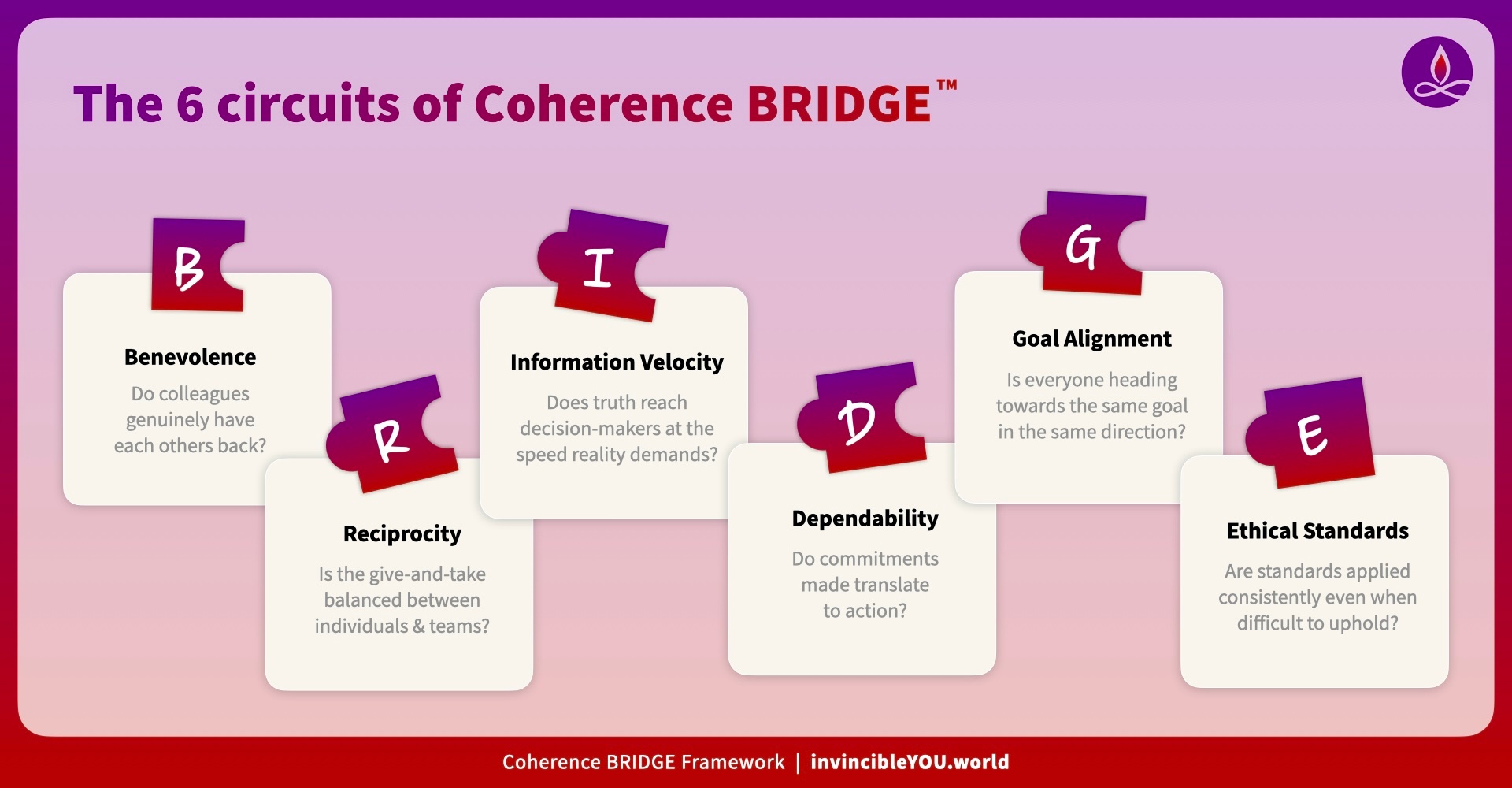
The strength of healthy organisations comes from the way each reinforces the others. The YES Bank journey offers examples of what happens when several begin weakening together.
One of the earliest shifts came long before the crisis:
Co-founder Harkirat Singh exited the bank after differences in direction. In 2008, Ashok Kapur lost his life during the Mumbai terror attacks. The personal tragedy was immeasurable. Organisationally, the bank also lost a respected peer capable of balancing the founder's influence.

Information also appeared to move at different speeds:
⚠️ The regulator identified concerns before the organisation acted decisively.
⚠️ Rating agencies reflected growing stress before management publicly acknowledged its seriousness.
⚠️ Corrective actions often followed external intervention rather than internal discovery.

Dependability followed a similar pattern:
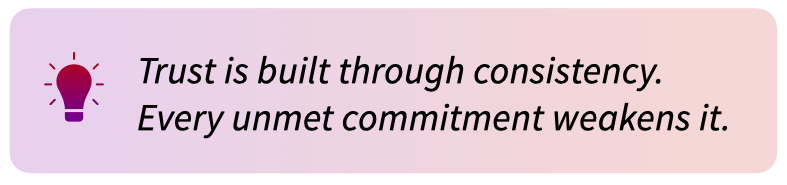
⚠️ Commitments to strengthen governance were made repeatedly.
⚠️ Regulatory observations suggested that improvements often arrived only after pressure had intensified.
Goal alignment deserves equal attention:
⚠️ The bank's stated ambition was sustainable growth.
⚠️ Its execution delivered extraordinary expansion.
⚠️ Growth itself wasn't unusual. The question was whether everyone responsible for governing that growth shared the same understanding of acceptable risk.
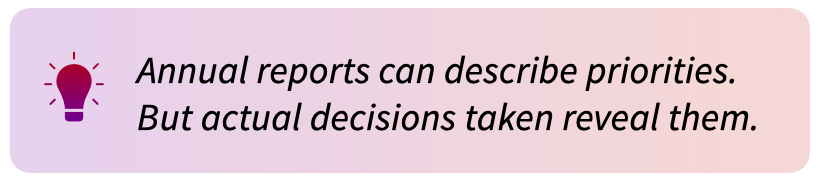
The final element is ethical standards. This isn't about prejudging legal proceedings or individual responsibility. It is about institutional design.

When several of these circuits begin deteriorating together, the organization becomes less capable of recognising that better decisions are needed.
When Leadership Becomes a Single Point of Failure
Every founder begins by relying on conviction. That's often what makes founders exceptional. They see opportunities others dismiss. They persist through uncertainty. They commit long before success is guaranteed.
As organisations grow, however, leadership must evolve.
The institution has to become stronger than the individual who created it.
That transition is one of the most demanding moments in any founder's journey. It requires building something that wasn't essential in the early years:
Trusted people who can challenge the founder without threatening the mission.
By the late 2010s, YES Bank appeared to be wrestling with that transition. Rana Kapoor had become deeply synonymous with the institution. His ambition shaped its growth. His confidence influenced its direction. His relationships defined much of its identity.
That model can create extraordinary momentum. But it also creates risk if the organisation gradually loses independent centres of judgment.
Leadership becomes concentrated. Counterweights weaken. Systems begin orbiting the individual rather than balancing the institution.
Engineers have a term for this: A single point of failure.
When one component becomes indispensable, the entire system becomes more vulnerable. The same principle applies to organisations. Strong institutions distribute judgment.
Which brings us back to the question that has followed this case from the beginning: Who inside YES Bank still possessed both the authority and the confidence to interrupt the organisation's momentum?
By early 2020, that responsibility appeared to rest with only one institution: The Reserve Bank of India.
Its intervention didn't create the crisis. It acknowledged that the organisation could no longer resolve it alone.
Rebuilding the Ability to Say "No"
The YES Bank story doesn't end with the moratorium. In many ways, that's where a different story begins: One of reconstruction.
Most people associate recovery with capital.
Yes, capital is essential. It restores liquidity and confidence in the immediate term. But reconstruction reaches further. It rebuilds an institution's ability to govern itself.
Following the moratorium, a consortium led by the State Bank of India recapitalised the bank. A new board was constituted. Prashant Kumar was appointed as Managing Director and CEO. Over the years that followed, stressed assets were addressed, governance practices strengthened and operational stability gradually returned. Those changes repaired more than the balance sheet. They restored counterweights.
🌱 Decision-making became less dependent on one individual.
🌱 Oversight became stronger.
🌱 Leadership succession became institutional rather than personal.
🌱 Regulatory engagement became more rigorous.
Viewed through the Coherence BRIDGE, the recovery becomes easier to understand:
🌱 Trust had to be earned again. So information had to move faster. Commitments had to become consistently visible. Growth had to coexist with greater discipline. Ethical standards had to stand independently of personalities. None of this happened overnight (institutional trust never does). It returns one decision, one quarter and one commitment at a time.
The Cost of Never Hearing "No"
It would be easy to read this as a banking story, but it isn't. It's a leadership story.
Every founder-led company will eventually face it.
Family businesses encounter it.
High-growth startups encounter it.
Established corporations encounter it.
The question remains remarkably consistent.
Who can still challenge the people making the biggest decisions?
Not formally. Actually.
Organizations become fragile when meaningful conflict disappears. When meetings become smoother, decisions become quicker, everyone appears aligned, leaders often celebrate these moments as evidence of trust. But sometimes they're witnessing the early signs of silence.
⚠️ The silence of unanswered questions.
⚠️ The silence of assumptions left untested.
⚠️ The silence that arrives when disagreement no longer feels worthwhile.
The most expensive word in an organisation isn't always "No."
Sometimes…. it's "Yes."
The Mirror
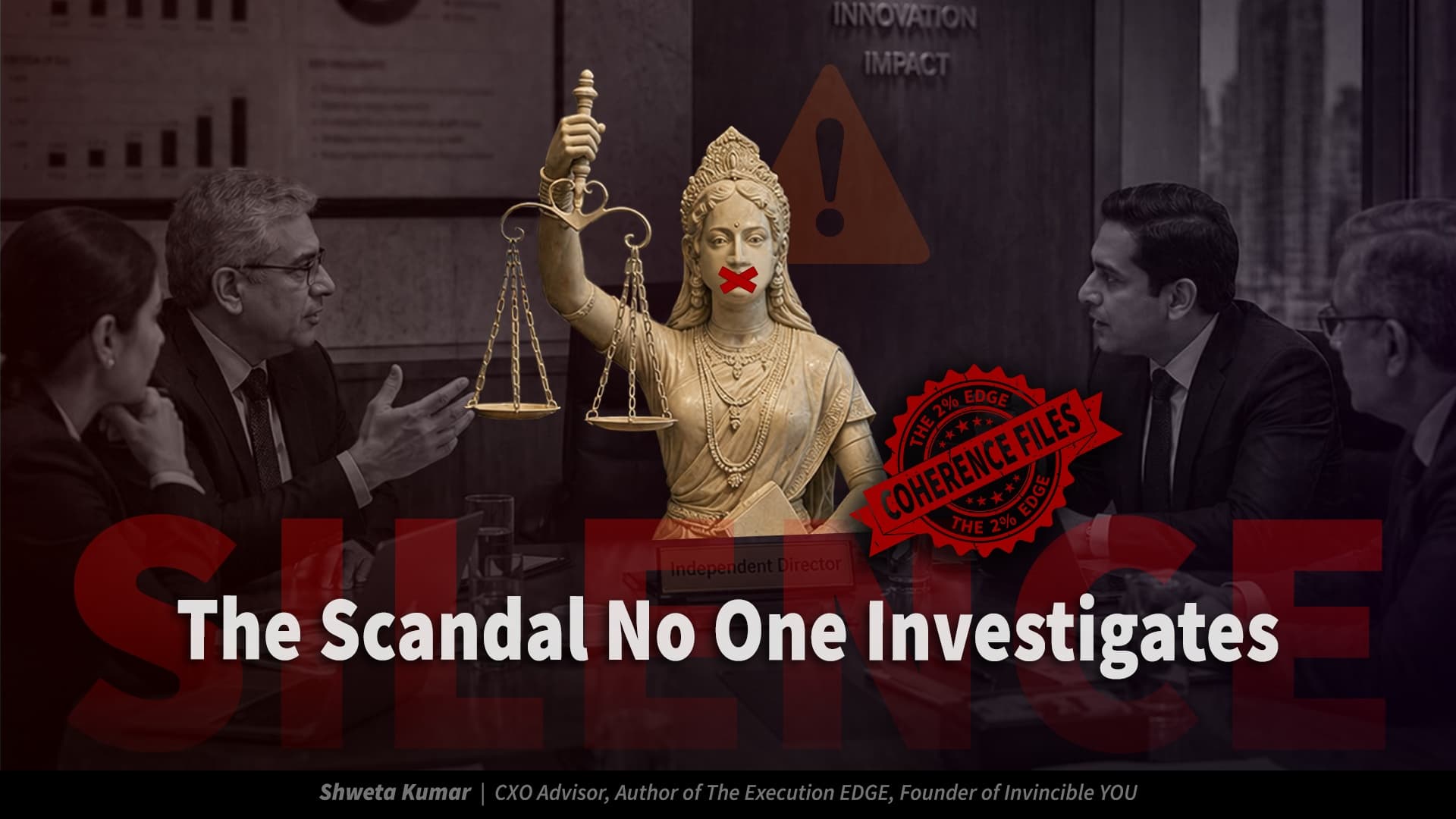
Every case file in this “Scandal That No One Investigates” series ends with a mirror, because these stories are never just about the organisations being examined. They're about the ones we lead.
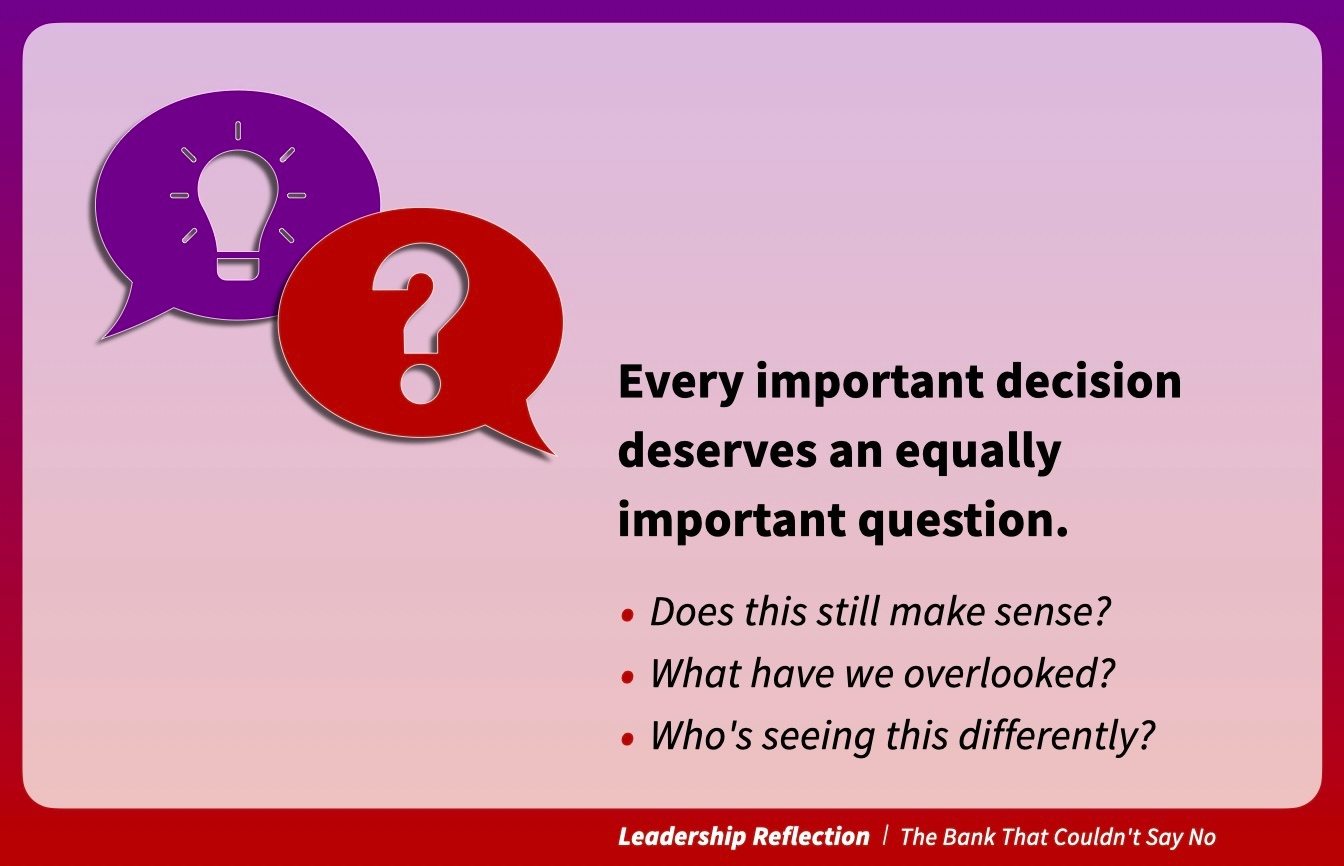
So pause for a moment and consider three questions:
💭 When was the last time someone genuinely changed your mind?
Maybe a junior or a peer. Someone whose challenge altered an important decision. If that moment feels distant, your organisation may be hearing agreement more often than truth.
💭 Who has permission to say "No"?
Authority can be assigned but permission is earned through culture. The healthiest organisations make disagreement feel like responsibility rather than rebellion.
💭 If your founder or CEO stepped away tomorrow, would the institution continue with confidence, or lose its centre of gravity?
That answer reveals more than the strength of a succession plan. It reveals whether leadership has become a system…. or a dependency (we explored the concept of identity vacuum in the HDFC’s case file – and what happened when the centre disappeared).
The YES Bank story reminds us that institutions rarely fail because one person makes a poor decision. They falter when too few people are willing (or able) to challenge those decisions.
Long before customers lost confidence, the organisation had begun losing something far more valuable. Its capacity for constructive dissent. That is the scandal no balance sheet records. And perhaps the one every leadership team should investigate before someone else has to.
Closing Reflection
The first case file explored the cost of silence.
This one explored one of silence's most convincing disguises: Agreement.
Silence isn't always the absence of words. Sometimes, it's the absence of challenge. A room full of intelligent people saying "yes" can sound remarkably healthy. Until one day, no one remembers how to say "no."
Stay tuned for the release of the next case file on Indigo (The Airline that Forgot to Hire Pilots). Subscribe to the newsletter to not miss the series.
I’d love to hear your reflections on this.
Feel free to write to me here.
Wishing you invincibility,
Shweta.