
An investigation into identity, silence, and the cost of borrowed coherence
On March 18, 2026, a short letter unsettled one of India’s most respected institutions.
Atanu Chakraborty, part-time chairman and independent director of HDFC Bank, resigned mid-tenure. His reason was sparse, almost restrained, but it was also very devastating in equal measure:
“Certain happenings and practices… are not in congruence with my personal values and ethics.”
What made the letter blow up wasn’t what it said.
It was what it didn’t.
It was quite intriguing for me that in a culture where professional niceties are near mandatory even in goodbyes, in the public excerpts of his letter though he expresses appreciation for independent directors and other staff, there is no mention of the executive management team by name. This apparent omission quite deafens silence.
No names.
No accusations.
No dramatic revelations.
Just a quiet withdrawal of alignment.
And it has sent a not-so-quiet signal.
Within three days, nearly $17 billion of shareholder wealth evaporated.
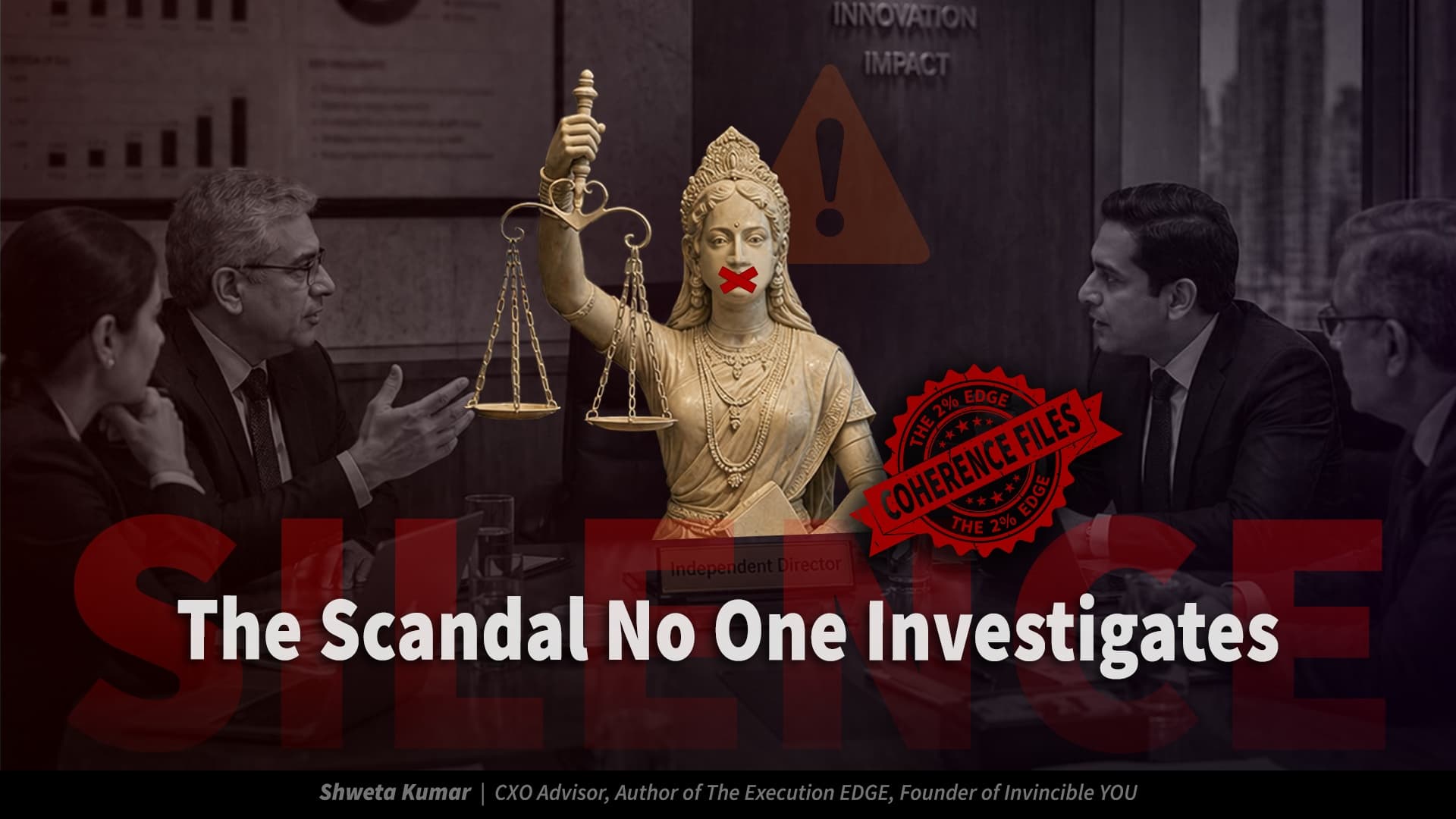
This to me is the LOUDEST silence in recent Indian corporate memory.
If you look at HDFC, the numbers were good and they had been good for years.
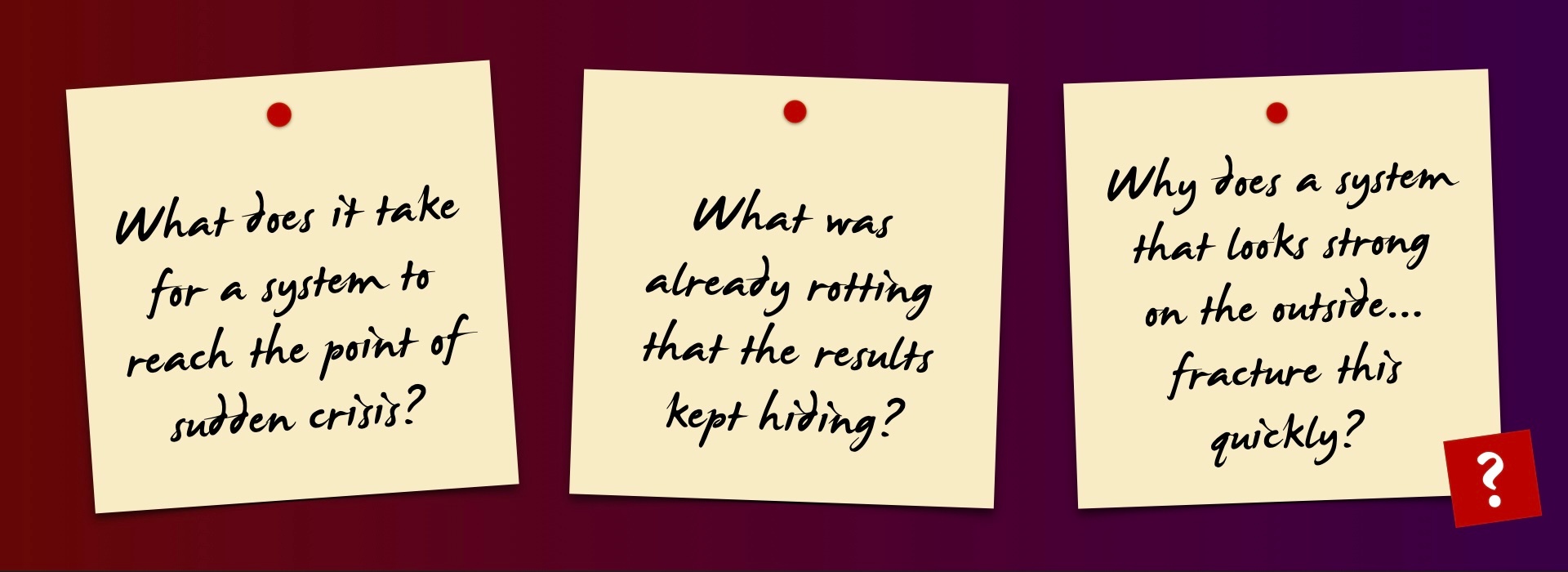
Which raises some deeper questions:
Clue #01:
The Inheritance and the Identity Vacuum
To understand this moment, you have to go back, because organizations inherit stories, beliefs, identities stronger than they inherit strategies.
For 26 years, HDFC Bank was shaped by Aditya Puri — not just as CEO, but as the carrier of coherence. His philosophy was clear:
“The brand is the personality of the corporation. It must have trust, integrity, and transparency as overriding values.”
Under him, the bank delivered over 16,000% shareholder returns.
He wasn’t just leading the system.
He was the system’s stabilizing force.
In system psychodynamics, there’s a concept from Wilfred Bion: dependency.
A group unconsciously begins to believe that one person holds all answers.
Over time, that belief becomes structure.
HDFC may have unknowingly built its psychological architecture around this one person center.
So when Puri stepped down in 2020, something deeper than a role became vacant.
Not a leadership gap.
A meaning vacuum.
Into that vacuum walked a man who by all accounts was enormously capable but temperamentally the opposite of what the organization had come to expect.
Open Magazine's profile of Sashidhar Jagdishan describes him as unassuming, grounded and approachable. And yet the contrast with Puri is quite stark. Jagdishan is media shy, low profile, while Puri was synonymous with the bank, media savvy and charismatic.
Here lies the subtle rupture:
(the beginning of a massive diagnosis)
When the person carrying an institution's identity leaves, the institution can face an existential question. The system struggles to recognize it in a different form.
The real question wasn’t about capability.
It was this:
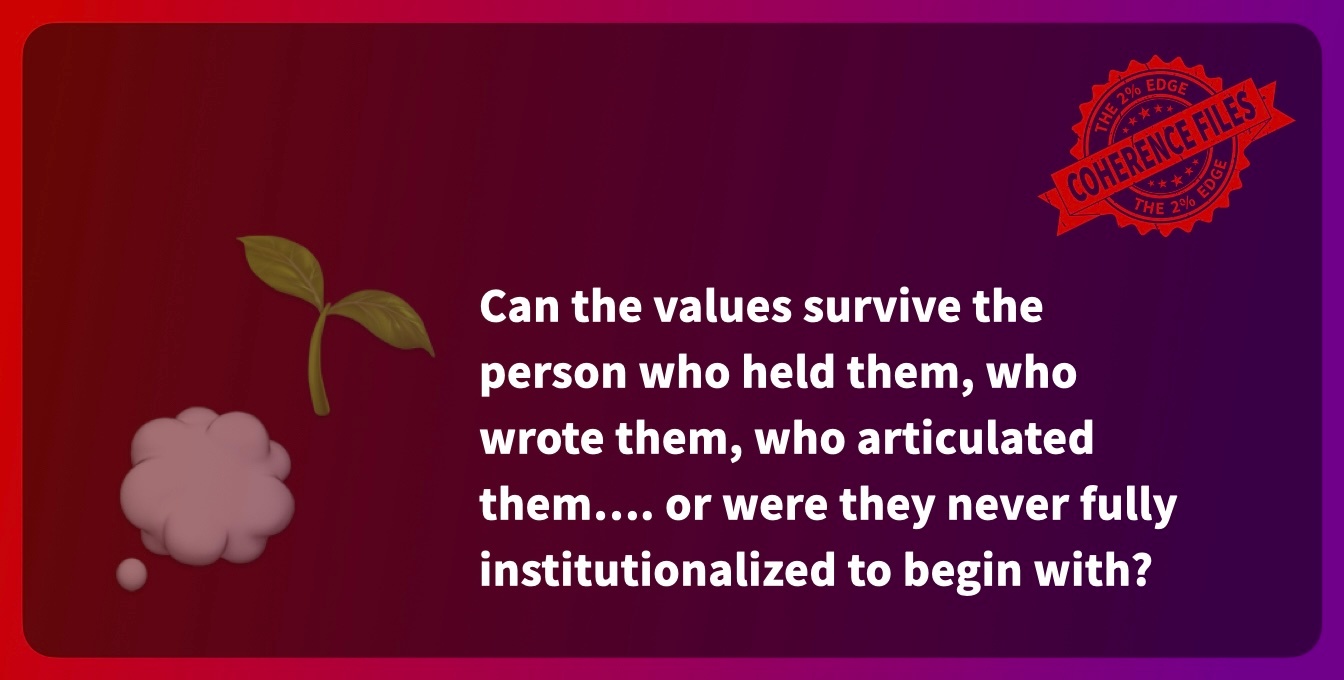
We will never know as an outsider.
But it is something to be curious about.
Clue #02:
Executive Drift — When the Center Softens
Breakdowns like this don’t begin with crisis.
They begin with drift.
Not dramatic betrayal.
But small accommodations, quiet compromises, convenient reinterpretations, and gradual normalization of behaviors that once would have seemed unthinkable.
This is what I call Executive Drift — the slow leakage of coherence from a system.
It doesn’t show up in quarterly numbers, but in the texture of the organization:
-
Conversations become less frank
-
Decisions don't get challenged
-
Talent starts looking elsewhere
-
Slight but steady lowering of the bar
And if you read the signals, HDFC had many.
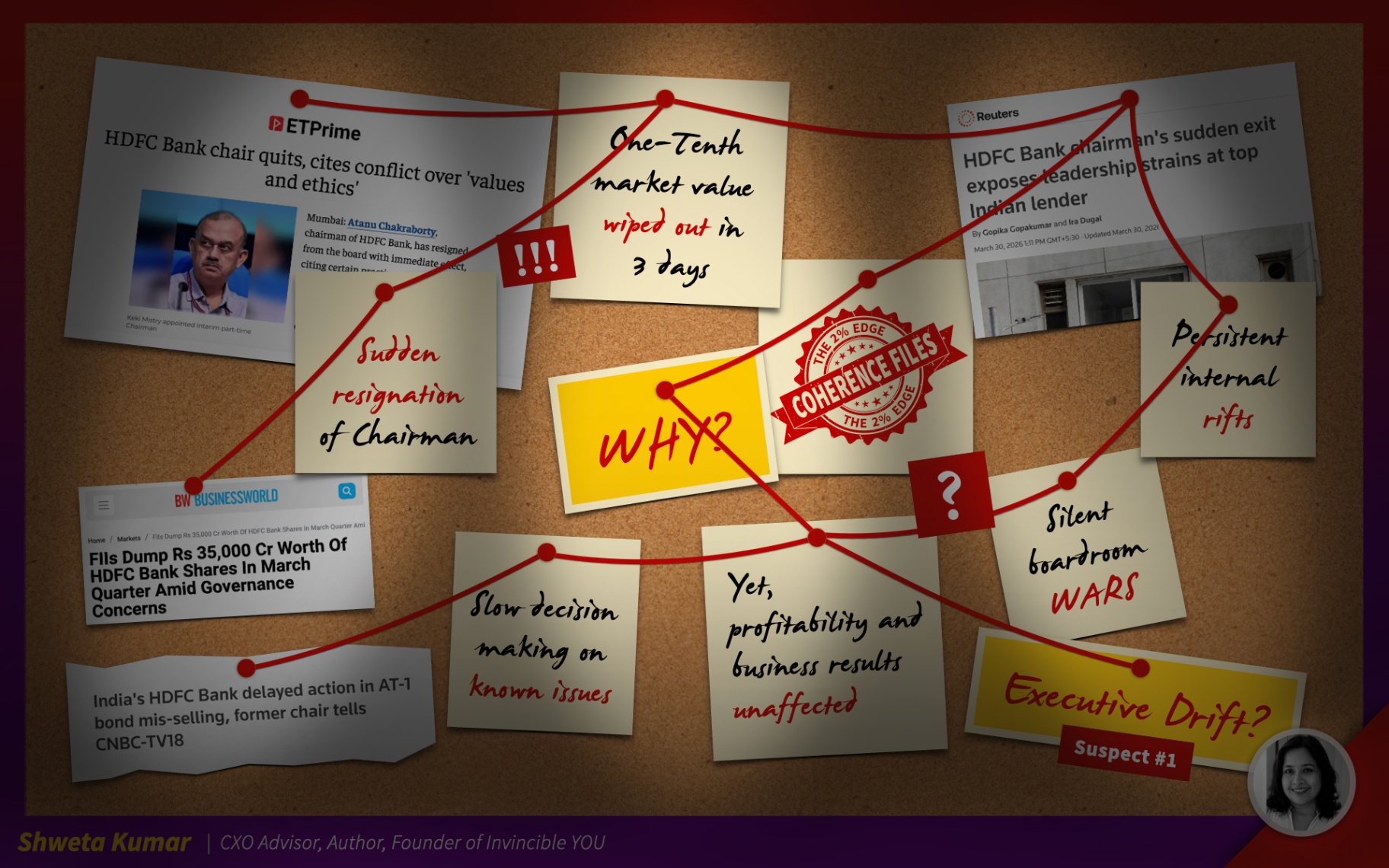
Exhibit A:
The Quiet Exit of Memory
Over time, several senior leaders exited:
-
CHRO Vinay Razdan
(resigned in June 2025 citing personal reasons) -
Executive Director Bhavesh Zaveri
(once described as a CEO contender, was not seeking reappointment when his board term ends) -
Group head Rahul Shyam Shukla
(October 2025)
Individually, these look like normal transitions.
Collectively, they form a pattern.
When people who shaped an institution, especially those who carry institutional memory, who know where things came from and what things mean, leave in clusters, then the system is sending a signal.
Especially the CHRO.
In psychodynamic terms, the CHRO often acts as the keeper of organizational conscience. When that role exits quietly, it rarely means “business as usual.” It signals that something about how people are heard, held, or valued has shifted.
Exhibit B:
Normalization of Ignoring the Uncomfortable
Reports revealed that mis-selling issues related to Credit Suisse bonds persisted for eight years before decisive action was taken.
Eight years. Not eight months.
That’s not a lapse.
That’s normalization.
And this is not just compliance failure.
It is cultural drift.
When an organization loses its internal critic — not the external regulator, not the board chairman — but the internal moral voice that says, “hey, this isn't right”, it has already begun to drift from its own story. It encourages people to learn what they can ignore.
Exhibit C:
The Boardroom War Fought In Silence
Reports suggest ongoing friction between the chairman and the CEO.
Disagreements might seem usual. But what matters here is looking deep into what kind of friction persists:
-
The two reportedly clashed over human resources policies and in at least one instance, Chakraborty changed the performance ratings of some senior executives, a prerogative traditionally held by the CEO.
-
A key flashpoint as per the Reuters report was the renewal of Jagdish's term as CEO. Chakraborty was not in favour of extending his term while most board members supported the renewal.
-
Earlier, in 2024 there was reportedly a dispute as to whether or not to sell a minority stake in subsidiary HDB Financial Services to Japan Mitsubishi UFJ Financial Group. Jagdishan supported it. Chakraborty opposed it. The sale did not go through and HDB was eventually listed instead.
Now these weren’t just strategic disagreements.
They were competing versions of what the organization should be.
And now you can already start seeing that there was no longer a shared identity strong enough to hold them together.
Both people were trying to protect something.
And in doing so, they destroyed the coherence they were each trying to protect.
Clue #03:
The Illusion of Numbers
Here’s where most leaders get misled:
Performance is not proof of a well-aligned team.
HDFC’s numbers were strong with profits growing, stable asset quality, and market position.
But beneath that:
-
Leaders were leaving
-
Issues were festering
-
Alignment was weakening
This is the illusion.
People are working, but not to create sustainable results.
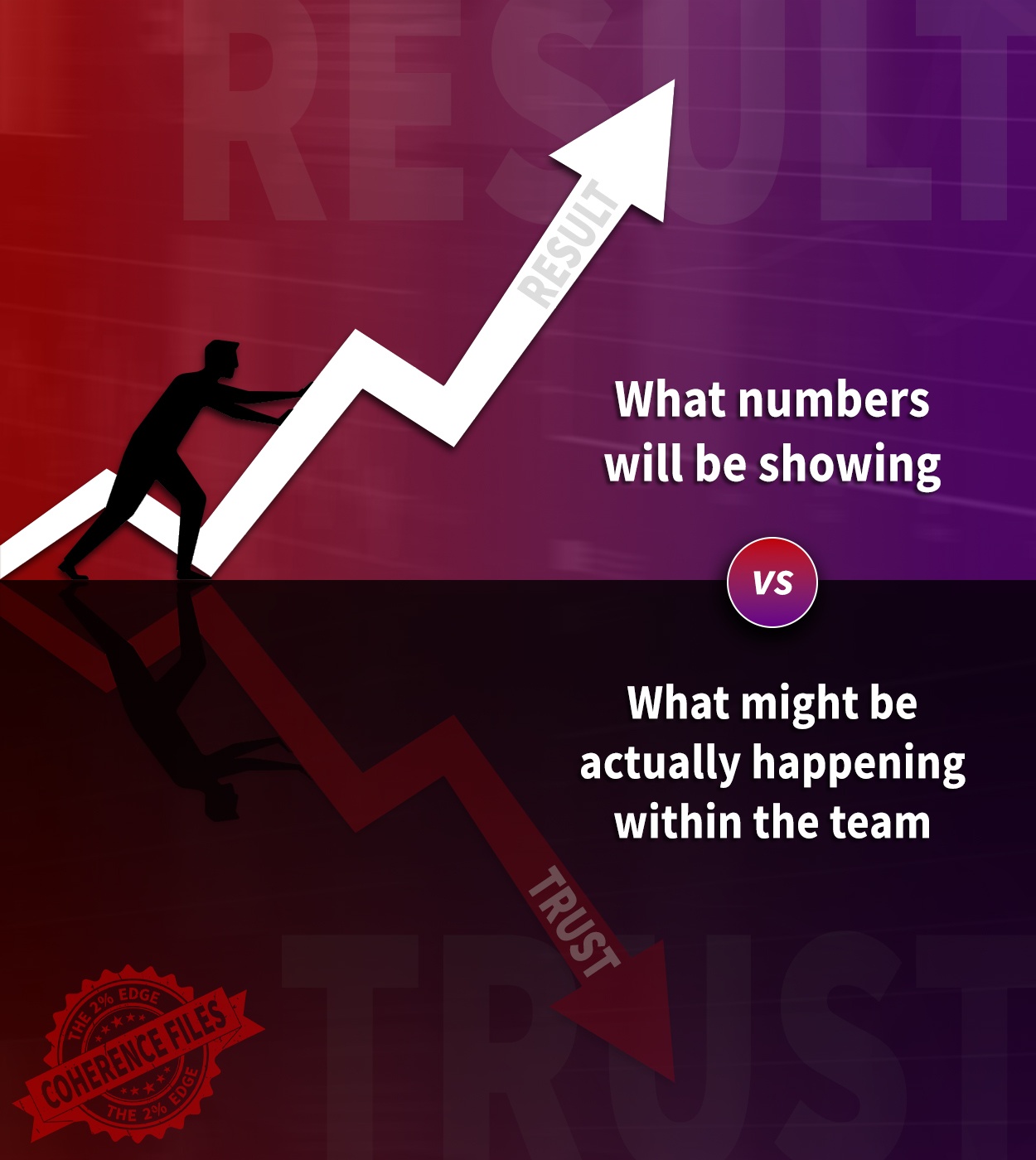
To sustain performance, we need trust.
Trust is the invisible architecture that determines how coherently results hold up.
When trust is present in an organization, people say the unsayable. They raise the uncomfortable thing in the meeting rather than in the corridor afterward. They hold each other to account — not because someone is watching, not because they care — but because they care about what they're building together. If trust is high, then your intern will ask the question as they know it will not cause any embarrassed laughters.
But when trust erodes, people don’t immediately disengage from their roles. They adapt. They start performing trust instead of practicing it.
-
Saying measured things
-
Managing perception upward
-
Not raising uncomfortable truths
And the most dangerous aspect to this?
Numbers still look good.
Until suddenly… they don’t.
That is the great tragedy of how organizations deceive themselves. Without addressing the ghosts of past upfront, organizations cannot retain their track record of success or results.
Below is what I sense was happening in HDFC too.
I: What the Market Actually Reacted To
The $17 billion loss wasn’t about the resignation itself.
It was about what it implied.
The market wasn’t reacting to an event.
It was reacting to narrative risk, a silent question:
Is the story we believed about this institution still true?
When that doubt enters, valuation becomes vulnerability.
II: Gift & Curse of the Extraordinary Hero
At a psychological level, something else may have been unfolding.
When a system depends too heavily on one leader:
-
Identity becomes externalized
-
Meaning becomes centralized
-
Accountability becomes diffused
When that leader exits, the dependency doesn’t disappear.
It searches for a new container.
If none emerges convincingly, the system fragments:
Some attach to one leader.
Others to another.
Many withdraw.
What was once coherence… becomes tension.
III: The Real Breakdown of Incoherence
Chakraborty’s phrase matters:
“Not in congruence with my values and ethics.”
This is not just disagreement.
This is incoherence.
A feeling that:
“This is no longer the organization I thought it was.”
And that’s the most expensive shift any institution can undergo.
Once coherence breaks, trust becomes conditional, decisions lose clarity, and culture loses memory.
When HDFC’s market pricing shed 17 billion dollars in three days on news that produced no operational revelation, no fraud discovery, no regulatory enforcement…. what it is basically doing is it is pricing the narrative coherence risk.
HDFC’s Story is a Mirror for Every Organization
This is not a story about failure.
HDFC remains a fundamentally strong institution. RBI has publicly stressed its sound financial position and professional management following the resignation. The fundamentals are very real. The bank will very likely recover (and in my fantasy, they will actually look at these otherwise intangible as data).
I wrote this article to bring out a pattern that it reflects. The mirror HDFC is holding up to India's corporate world and to every leader reading this is worth sitting with.
We’ve seen echoes of it before with ICICI Bank, Infosys, and other high-performing, high-reputation institutions.
The pattern is this:
-
We build institutions on strong leaders.
-
We confuse the person's values with the system's values.
-
We don't build the infrastructure of trust, the norms, the practices, the psychological safety, the honest feedback loops that allows an institution to hold its values when the founding person leaves.
-
We then mistake the beauty of the numbers (that remains strong for a while) for the health of the system.
-
We ignore early signs, until a huge drop arrives demanding correction.
What Trust Actually Asks of Us
Trust is not a sentiment.
It is a system.
Systemic trust requires:
-
Saying the uncomfortable thing early
-
Treating long-standing issues as signals, not exceptions
-
Protecting those who surface inconvenient truths
-
Building feedback loops that don’t depend on hierarchy
Most importantly:
It requires separating loyalty to a person
from loyalty to what that person stood for.
Aditya Puri said it clearly:
Trust, integrity, transparency — overriding values.
The tragedy is not that HDFC forgot this. The tragedy is that they may have built it around the person who said it more than around the system that was supposed to hold it.
Were they ever fully transferred from the person… to the system?
For Every Leader Reading This
The question is not whether you trust your people.
The question is:
💭🌱 Have you built the conditions where truth can surface without any hesitation?
Somewhere in your organization, there may be:
-
A long-standing issue being minimized
-
A senior exit that hasn’t been fully processed
-
A disagreement that has gone silent
-
Strong numbers masking subtle drift
By the time these silences become visible, it’ll be already expensive.
So focus on bringing them out by building the psychological safety, the honest containers, the rhythms in which trust can actually live long after you or the founding members have left.
Because when trust depends on one individual,
it is not institutional. It is borrowed.
And borrowed coherence always comes due.
How does your Trust balance look today?
Wishing you invincibility,
Shweta.